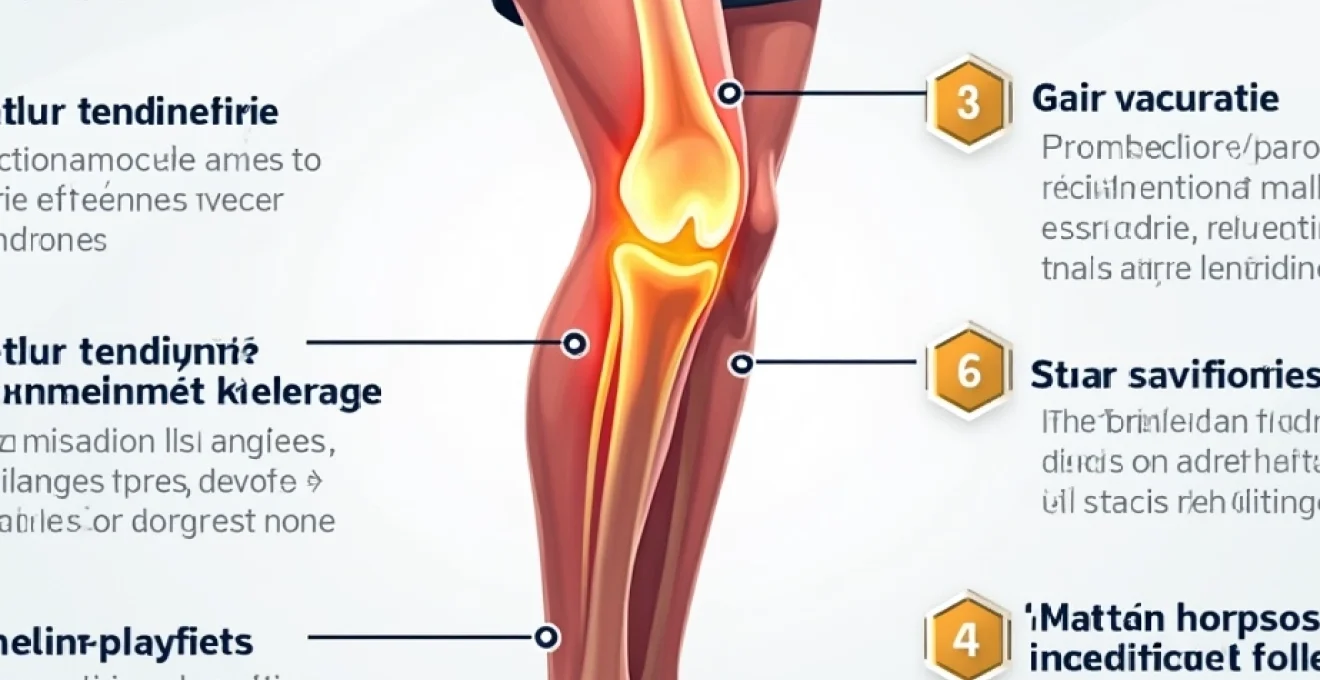
Knee injuries can significantly alter a person’s ability to move and perform everyday tasks. Whether acute or chronic, these injuries affect not just the knee itself, but can have far-reaching consequences on overall mobility and quality of life. From professional athletes to the elderly, knee injuries pose unique challenges that often require specialized treatment and rehabilitation strategies. Understanding the biomechanics of knee injuries and their effects on daily activities is crucial for developing effective management approaches and restoring functional independence.
Anatomy of common knee injuries and their biomechanical impact
The knee joint is a complex structure comprising bones, ligaments, tendons, and cartilage. When any of these components are damaged, it can lead to significant alterations in knee function. Common knee injuries include ligament tears, meniscus damage, and cartilage deterioration. Each of these injuries affects the knee’s biomechanics in unique ways, leading to changes in how the joint moves and bears weight.
Ligament injuries, such as tears to the anterior cruciate ligament (ACL) or medial collateral ligament (MCL), can result in instability and a reduced ability to pivot or change direction quickly. Meniscus tears, on the other hand, often lead to pain, swelling, and decreased shock absorption within the joint. Cartilage injuries or degeneration, as seen in conditions like osteoarthritis, can cause pain and stiffness, limiting the knee’s range of motion and ability to bear weight comfortably.
Acute vs chronic knee injuries: differential effects on mobility
The impact of knee injuries on mobility can vary significantly depending on whether the injury is acute or chronic. Acute injuries, such as those resulting from sports accidents or falls, often lead to sudden and severe limitations in mobility. Chronic injuries, which develop over time due to repetitive stress or degenerative conditions, typically cause a gradual decline in function and mobility.
ACL tears and pivot shift phenomenon
ACL tears are among the most common and severe acute knee injuries. The ACL plays a crucial role in stabilizing the knee during rotational movements. When torn, it leads to a phenomenon known as the « pivot shift, » where the tibia (shin bone) slides forward excessively relative to the femur (thigh bone) during certain movements. This instability can significantly impair an individual’s ability to perform activities that require quick changes in direction, such as cutting or pivoting in sports.
Meniscus damage and joint space narrowing
Meniscus tears, whether acute or degenerative, can lead to joint space narrowing over time. The meniscus acts as a cushion between the femur and tibia, distributing weight evenly across the knee joint. When damaged, it can no longer perform this function effectively, leading to increased stress on the articular cartilage. This can accelerate wear and tear, potentially leading to osteoarthritis and further mobility limitations.
Patellar tendinopathy and anterior knee pain syndrome
Patellar tendinopathy, often referred to as « jumper’s knee, » is a chronic condition characterized by pain and weakness in the patellar tendon. This condition can significantly impact activities that involve repetitive knee extension, such as climbing stairs or jumping. Anterior knee pain syndrome, which includes conditions like patellofemoral pain syndrome, can make activities like squatting, kneeling, or prolonged sitting extremely uncomfortable.
Osteoarthritis progression and cartilage degradation
Osteoarthritis (OA) is a progressive condition that involves the degradation of articular cartilage within the knee joint. As OA advances, individuals often experience increasing pain, stiffness, and reduced range of motion. This can severely limit mobility, making activities like walking long distances or navigating uneven terrain challenging. The impact of OA on daily activities tends to worsen over time, potentially leading to significant disability if left unmanaged.
Gait analysis in Knee-Injured individuals
Gait analysis is a valuable tool for understanding how knee injuries affect an individual’s walking pattern. By examining the biomechanics of walking, healthcare professionals can identify specific areas of dysfunction and develop targeted treatment strategies. Gait analysis typically involves observing and measuring various aspects of the walking cycle, including step length, cadence, and joint angles.
Kinematic changes in walking patterns
Knee injuries often lead to notable changes in walking kinematics. Individuals with knee injuries may exhibit reduced knee flexion during the swing phase of gait, a phenomenon known as stiff knee gait . This alteration can result in a shorter stride length and decreased overall walking speed. Additionally, some individuals may develop a limp or antalgic gait pattern to avoid pain, further altering their normal walking mechanics.
Ground reaction force alterations
The way an injured knee interacts with the ground during walking can provide valuable insights into the severity and nature of the injury. Ground reaction force (GRF) measurements often show reduced vertical force during the stance phase in individuals with knee injuries. This reduction in force is typically a compensatory mechanism to minimize pain and protect the injured joint. However, it can lead to asymmetrical loading patterns that may cause additional stress on other joints and muscles.
Compensatory mechanisms and muscle activation patterns
In response to knee injuries, the body often develops compensatory mechanisms to maintain mobility. These can include altered muscle activation patterns, such as increased reliance on hip muscles to compensate for weakened quadriceps. While these compensations may allow for continued mobility in the short term, they can lead to secondary issues over time, such as muscle imbalances or overuse injuries in other areas of the body.
Impact on activities of daily living (ADLs)
Knee injuries can have a profound impact on an individual’s ability to perform activities of daily living (ADLs). These essential tasks, which many take for granted, can become challenging or even impossible depending on the severity of the knee injury. Understanding how knee injuries affect specific ADLs is crucial for developing effective rehabilitation strategies and assessing an individual’s progress over time.
Stair navigation challenges Post-Knee injury
Navigating stairs is often one of the most challenging activities for individuals with knee injuries. Ascending stairs requires significant knee flexion and quadriceps strength, while descending stairs places high compressive forces on the knee joint. Individuals with conditions such as patellofemoral pain syndrome or osteoarthritis may experience increased pain and instability when using stairs, often leading to the development of compensatory strategies like leading with the unaffected leg or using handrails for additional support.
Sit-to-stand performance metrics
The sit-to-stand movement is a fundamental activity that can be significantly impaired by knee injuries. This movement requires a complex interplay of muscle strength, balance, and joint mobility. Individuals with knee injuries often exhibit slower sit-to-stand times and may rely more heavily on their arms for assistance. Assessing sit-to-stand performance can provide valuable insights into an individual’s functional capacity and progress during rehabilitation.
Prolonged standing and Weight-Bearing limitations
Many knee injuries can make prolonged standing or weight-bearing activities uncomfortable or painful. This limitation can have significant implications for individuals whose occupations or daily activities require extended periods of standing. Conditions such as meniscus tears or osteoarthritis can lead to increased pain and swelling with prolonged weight-bearing, necessitating frequent breaks or the use of assistive devices to manage discomfort.
Driving ability and reaction time changes
Knee injuries can also impact an individual’s ability to drive safely. Operating vehicle pedals requires precise control and quick reactions, which may be compromised in the presence of knee pain or instability. Studies have shown that individuals with certain knee conditions, such as ACL injuries, may have slower brake reaction times, potentially increasing the risk of accidents. This impact on driving ability can have significant implications for an individual’s independence and daily functioning.
Rehabilitation strategies for restoring knee function
Effective rehabilitation is crucial for restoring knee function and improving mobility following an injury. A comprehensive rehabilitation program typically incorporates a range of strategies tailored to the specific needs and goals of the individual. These strategies aim to address pain, improve range of motion, increase strength, and enhance overall functional capacity.
Neuromuscular electrical stimulation (NMES) protocols
Neuromuscular electrical stimulation (NMES) is a valuable tool in knee rehabilitation, particularly for addressing muscle weakness and atrophy. NMES involves the use of electrical currents to stimulate muscle contractions, helping to maintain or improve muscle strength when voluntary contractions are difficult or painful. This technique is especially useful in the early stages of rehabilitation following surgery or in cases where significant quadriceps weakness is present.
Proprioceptive training and balance exercises
Proprioception, or the body’s ability to sense joint position and movement, is often impaired following knee injuries. Proprioceptive training and balance exercises are essential components of knee rehabilitation programs. These exercises help improve neuromuscular control, enhance stability, and reduce the risk of re-injury. Examples include single-leg balance exercises, wobble board training, and activities that challenge the individual’s ability to maintain balance while performing functional tasks.
Eccentric strengthening for patellar tendinopathy
Eccentric strengthening exercises have shown particular efficacy in the treatment of patellar tendinopathy. These exercises involve lengthening the muscle under load and have been demonstrated to promote tendon remodeling and reduce pain. A common protocol for patellar tendinopathy is the decline squat exercise , performed on a slanted board to increase the load on the patellar tendon during the eccentric phase of the movement.
Plyometric progression for return to sport
For athletes and active individuals looking to return to sports following a knee injury, plyometric training is an essential component of late-stage rehabilitation. Plyometric exercises involve rapid, powerful movements that help improve explosive strength, agility, and neuromuscular control. A carefully progressed plyometric program can help bridge the gap between basic strength training and the high-intensity demands of sports performance, ensuring a safer return to athletic activities.
Assistive technologies and mobility aids for knee injuries
Assistive technologies and mobility aids play a crucial role in managing the impact of knee injuries on daily activities. These devices can help individuals maintain independence, reduce pain, and improve overall mobility. The choice of assistive device depends on the nature and severity of the knee injury, as well as the specific functional limitations experienced by the individual.
Common assistive devices for knee injuries include knee braces, which provide support and stability to the injured joint. These range from simple compression sleeves to more complex hinged braces that limit certain movements. Canes and crutches can help offload weight from the affected knee during walking, while walkers provide additional stability for those with more significant mobility limitations.
For individuals with chronic knee conditions or those recovering from surgery, specialized equipment such as raised toilet seats, shower chairs, and grab bars can make daily activities safer and more manageable. Additionally, adaptive equipment like long-handled reachers or sock aids can help individuals maintain independence in dressing and other self-care tasks when bending the knee is difficult or painful.
As technology advances, newer assistive devices are emerging to address the specific needs of individuals with knee injuries. These include smart knee braces that can provide real-time feedback on joint loading and movement patterns, as well as exoskeleton devices that can assist with walking and stair climbing. While many of these technologies are still in development or early stages of adoption, they hold promise for further improving mobility and quality of life for individuals with knee injuries in the future.