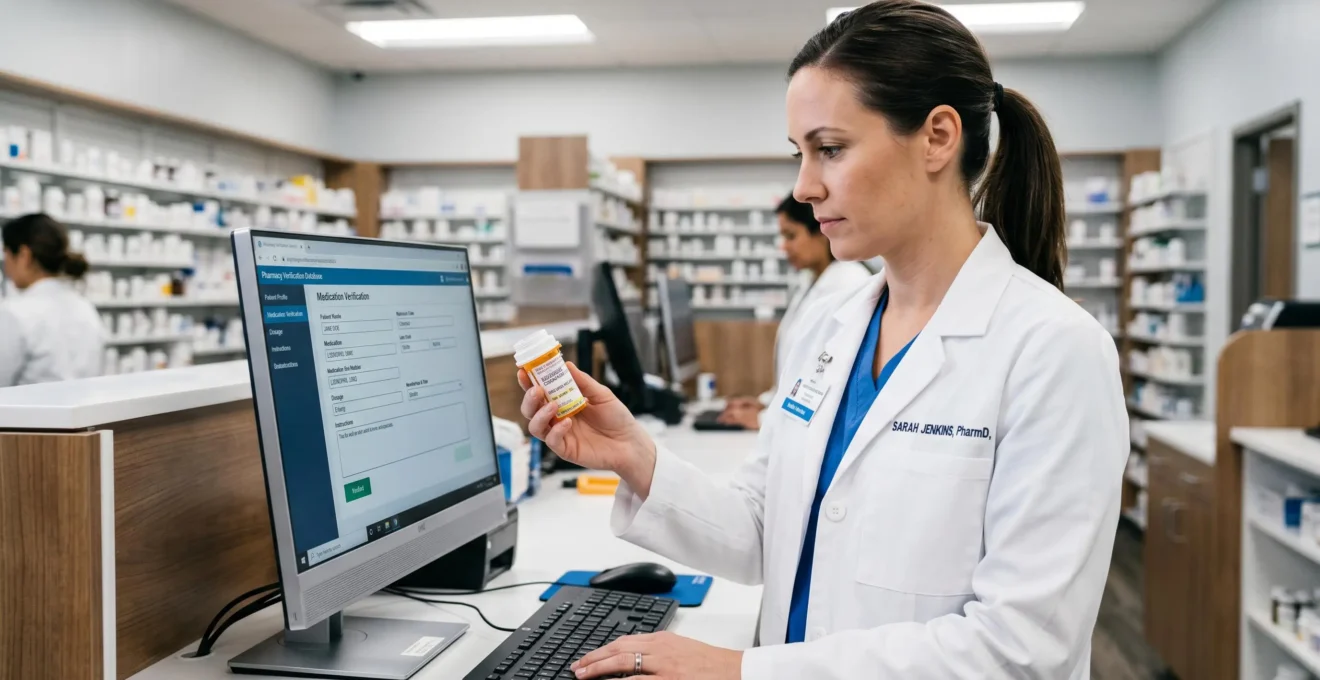
This content is provided for informational purposes only and does not constitute medical advice. Consult a qualified healthcare professional for any decisions regarding your health and medication needs.
Regulatory enforcement patterns demonstrate a persistent gap between consumer expectations and digital pharmacy reality. While verified platforms provide secure access to authentic medications under pharmacist supervision, unregulated operations exploit trust through sophisticated website design and deceptive credential displays. The verification process outlined here equips you with official database tools and regulatory red flags drawn directly from FDA enforcement actions and NABP fraud investigations.
Your pharmacy verification essentials in 90 seconds
- Check NABP VIPPS accreditation at safe.pharmacy (2 minutes)
- Verify state pharmacy license number through state board lookup
- Confirm prescription requirement— »no Rx needed » signals illegal operation
- Test pharmacist consultation access; legitimate sites provide licensed pharmacist contact
- Cross-reference physical U.S. address and working phone number with area code
Why counterfeit medications flood online markets
The scale of non-compliance shapes the online pharmaceutical landscape in ways most consumers never see. According to data consolidated by NABP’s Buy Safely initiative, nearly 95% of websites offering prescription-only drugs online operate illegally. The National Association of Boards of Pharmacy has identified more than 40,000 websites failing to comply with patient safety and pharmacy practice standards or applicable laws.
96%
of illegal online pharmacies reviewed by NABP did not require a valid prescription
This isn’t abstract regulatory concern. Counterfeit products impact all medication categories, causing treatment failure and direct patient harm from wrong dosages or toxic contaminants. The official WHO fact sheet on falsified medicines documents that countries spend an estimated $30.5 billion annually on substandard and falsified medical products, with online markets serving as primary distribution channels. In 2024 alone, the DEA seized more than 60 million fentanyl pills from illegal online sellers. The most reliable verification approach involves understanding that convenience cannot override credential authentication when medication safety is at stake.
Trusted verification tools and regulatory resources
Bookmark the following authoritative platforms for repeated pharmacy verification and medication safety information. Each serves distinct functions within the broader authentication ecosystem, from federal regulatory guidance to independent third-party monitoring.
The FDA’s BeSafeRx program provides comprehensive consumer resources for recognizing safe online pharmacies and warning signs of unsafe operations. The platform includes state-licensed pharmacy lookup tools, reporting mechanisms for suspected illegal drug sales through FDA MedWatch, and updated safety communications on counterfeit medication risks. According to FDA guidance, safe online pharmacies always require a doctor’s prescription, provide a U.S. physical address and phone number, have a licensed pharmacist on staff, and maintain active state board licensing.
Distinguishing legitimate platforms from fraudulent operations requires examining specific transparency markers consistently displayed by regulated pharmacies. Properly regulated platforms like Euro-Pharmas demonstrate credential transparency in practice through regulatory compliance documentation, licensed pharmacist consultation access, and verifiable contact information. These platforms operate under jurisdiction-specific pharmacy regulations with clear international delivery standards and published verification credentials.
The NABP verification database at safe.pharmacy remains the authoritative source for VIPPS accreditation confirmation and .pharmacy domain verification. State pharmacy board directories accessible through NABP resources enable jurisdiction-specific license validation. For international pharmacy evaluation where U.S. databases offer limited coverage, LegitScript certification provides third-party verification extending to licensed operations outside U.S. regulatory jurisdiction, though importation legality remains a separate consideration.
Spotting fraudulent pharmacy operations before you purchase
Pharmacy fraud investigations typically uncover patterns visible within the first 30 seconds of landing on a site. Pattern recognition saves time by eliminating obviously illegal operations before investing effort in detailed database verification. The red flags below emerge from documented enforcement cases rather than theoretical caution.
Website and communication warning signals
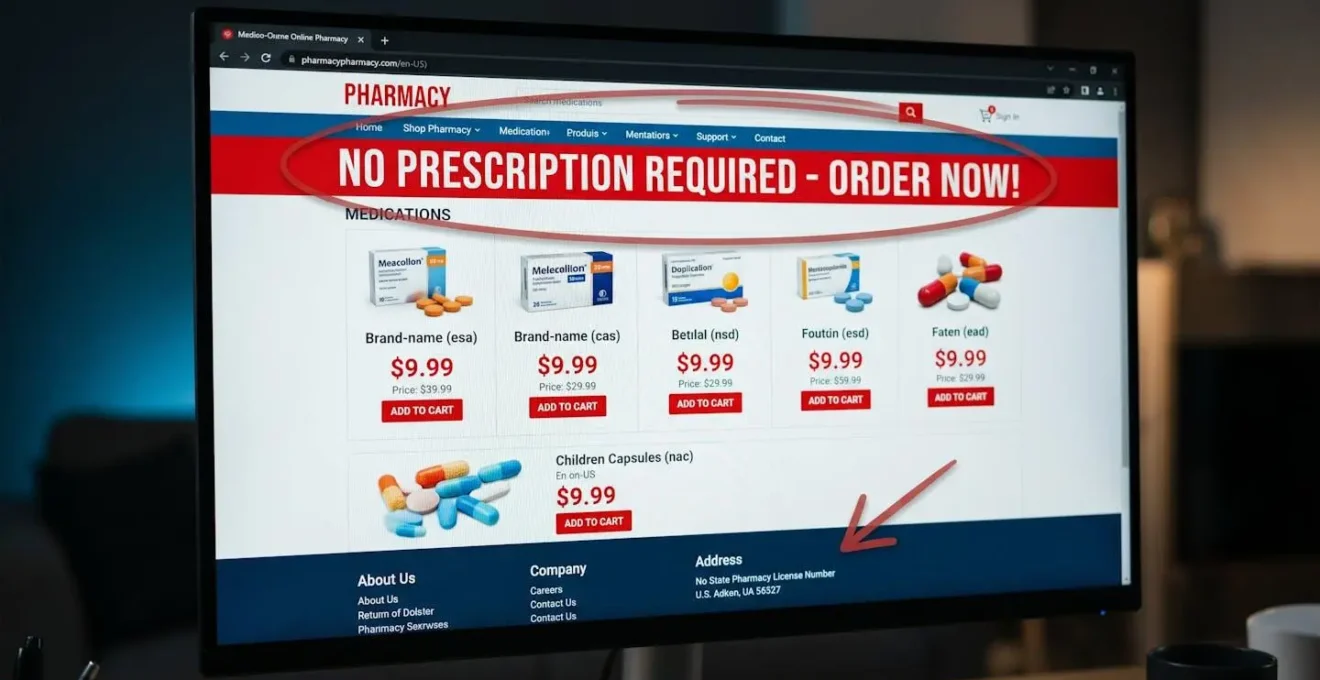
Professional pharmacy sites display specific credential markers absent from fraudulent operations. Look for missing physical street addresses—post office boxes or complete address absence indicate attempts to avoid regulatory jurisdiction. Generic email-only contact (no phone number with identifiable area code) prevents real-time pharmacist consultation required by law. The more reliable indicator: spelling errors in medication names, unprofessional grammar in product descriptions, or pressure tactics. Legitimate pharmacies don’t create artificial urgency around prescription medication access.
Prescription and pricing red flags
Any site advertising « no prescription needed » for prescription medications operates illegally under U.S. federal law, full stop. This single phrase disqualifies a pharmacy regardless of other credential displays. Pricing triggers warrant equal scrutiny. Brand-name medications discounted 50-80% below verified pharmacy rates signal either counterfeit products or illegal importation.
Missing credentials and regulatory violations
Regulatory-compliant pharmacies publish their state pharmacy license number prominently, typically in the footer or « About Us » section. This number enables verification through state board databases. Absence of this credential means the operation either lacks licensing or deliberately hides non-compliance. Licensed pharmacist availability represents another legal requirement. Test this by attempting to access pharmacist consultation—legitimate operations provide direct contact methods. Sites offering only generic contact forms or automated responses fail this basic compliance standard.
- Physical U.S. street address displayed (not just P.O. box)?
- State pharmacy license number visible on website?
- Valid prescription explicitly required for Rx medications?
- Licensed pharmacist consultation access offered?
- Working U.S. phone number with area code provided?
If ANY answer is « NO, » do not proceed with this pharmacy. Any single failure indicates regulatory non-compliance requiring immediate site abandonment.
Your verification protocol: databases and checks that matter
Once a site passes initial red flag screening, credential authentication begins. The most effective verification strategy layers multiple official databases rather than relying on single-source confirmation. Time investment ranges from 2 to 10 minutes depending on method selection and pharmacy complexity.
Verification databases confirm three core elements: legitimate business registration, active pharmacy licensing in good standing, and compliance with prescription dispensing regulations. The table below prioritizes methods by time efficiency and reliability level to help you allocate verification effort appropriately.
| Verification Method | Time Required | Reliability Rating | Coverage Scope |
|---|---|---|---|
| NABP VIPPS database | 2-3 minutes | High (gold standard) | U.S. pharmacies only |
| State pharmacy board license lookup | 5-10 minutes | High (official state record) | State-specific (U.S.) |
| FDA BeSafeRx resources | 3-5 minutes | Medium (educational guidance) | U.S. focus with international warnings |
| LegitScript certification | 2 minutes | Medium-High (third-party) | U.S. and international pharmacies |
Prioritize High reliability methods for U.S. pharmacies; combine multiple methods for international pharmacy evaluation.
Using NABP’s .pharmacy verification system
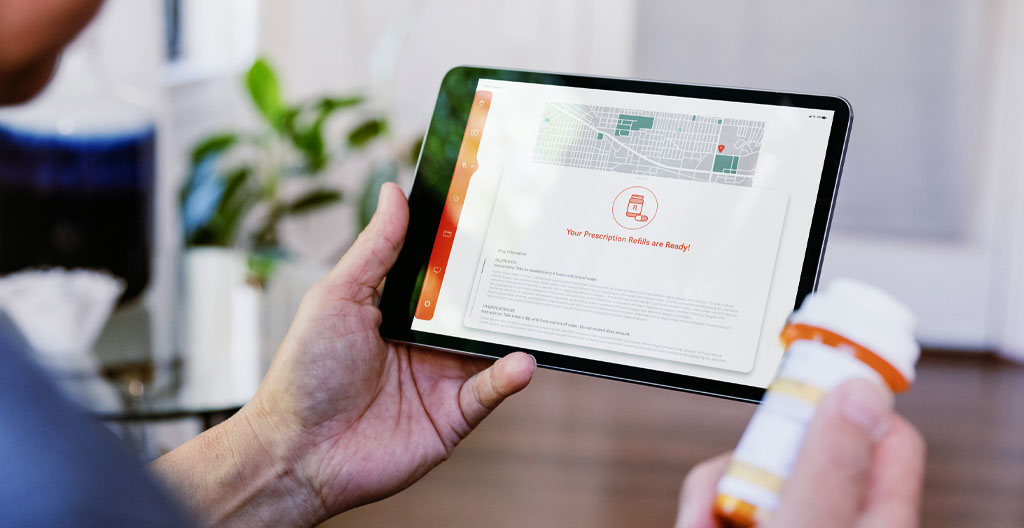
NABP VIPPS accreditation represents the gold standard for U.S. online pharmacy verification. Access the database at safe.pharmacy and enter the pharmacy name or web address. Accredited pharmacies display the blue VIPPS seal and appear in search results with active accreditation status, state licensing details, and compliance verification dates. The .pharmacy domain itself functions as a verification tool. Only pharmacies meeting NABP standards can register .pharmacy web addresses, creating a trusted domain namespace.
Cross-referencing state pharmacy board licenses
State pharmacy boards maintain public license verification databases accessible online. Navigate to your state board of pharmacy website and locate the license lookup tool. Enter the pharmacy name or license number displayed on the site you’re evaluating. Valid results show active license status, issue and expiration dates, physical location verification, and disciplinary action history.
Confirming prescription requirements and pharmacist access
Test prescription protocols by attempting to add a prescription medication to your cart. Legitimate operations halt the checkout process and require prescription upload or transfer from your current pharmacy before dispensing. Pharmacist access verification requires direct interaction. Call the displayed phone number during business hours or initiate live chat. You should reach a licensed pharmacist who can answer medication questions and discuss interactions. These verification principles extend beyond prescription drugs to other health products; similar caution applies to ways to avoid supplement risks when purchasing online.
FAQ: Common questions about online medication verification
Can a legitimate pharmacy operate without appearing in the NABP VIPPS database?
Yes. VIPPS accreditation is voluntary, meaning some legitimately licensed U.S. pharmacies choose not to pursue NABP certification despite maintaining active state licenses and regulatory compliance. International pharmacies licensed in their home jurisdictions (Canada, European countries) typically won’t appear in U.S. databases but may still operate legally under their national pharmacy regulations. For these cases, verify through the pharmacy’s home country regulatory authority (such as NAPRA for Canadian pharmacies) and confirm compliance with applicable importation regulations. Absence from NABP databases doesn’t automatically indicate fraud, but it requires alternative verification methods and awareness of cross-border legal limitations.
How do I verify generic medication authenticity versus brand-name drugs?
Generic medications approved by the FDA appear in the Orange Book (Approved Drug Products with Therapeutic Equivalence Evaluations), accessible through FDA.gov. Cross-reference the generic manufacturer name and product details against Orange Book listings to confirm FDA approval and therapeutic equivalence ratings. Legitimate pharmacies dispense generics only from FDA-approved manufacturers. If a pharmacy offers generic versions of medications that lack FDA approval or come from unlisted manufacturers, that signals potential counterfeit product sourcing. The verification process remains identical—confirm pharmacy licensing first, then validate that specific products come from approved sources.
What should I do if I’ve already purchased from a suspected fraudulent pharmacy?
Stop taking the medication immediately and consult your healthcare provider before resuming treatment. Bring the medication packaging and any remaining pills to your appointment—your provider may want to examine them or report the incident. File a report with FDA MedWatch (the FDA safety information and adverse event reporting program) at fda.gov/medwatch, providing pharmacy details, website information, and medication packaging photos. Contact your state board of pharmacy to report the suspected illegal operation. Monitor your financial accounts for unauthorized charges and consider placing fraud alerts if you provided payment information to the site. Your healthcare provider can issue a new prescription through a verified pharmacy to ensure you receive authentic medication.
How can I report a suspected counterfeit medication or fraudulent pharmacy?
Multiple reporting channels exist for different violation types. Report suspected counterfeit medications or adverse reactions through FDA MedWatch at fda.gov/medwatch or call 1-800-FDA-1088. For illegal online pharmacy operations, use the FDA’s online drug sales reporting system. Contact your state board of pharmacy directly—most boards maintain complaint submission systems for unlicensed pharmacy activity. NABP accepts reports of illegal pharmacy websites through safe.pharmacy reporting tools. Local law enforcement and the FBI Internet Crime Complaint Center (ic3.gov) handle fraud and identity theft aspects. Include website URLs, payment information, medication photos, and transaction documentation when filing reports. Certain medication categories carry additional regulatory requirements; for example, see details on pseudoephedrine cold medicines which face federal purchase restrictions regardless of online or in-store sale.
Authentication becomes routine once you internalize the core verification sequence: screen for red flags first, apply database verification second, test prescription protocols third. Most legitimate pharmacy evaluations complete in under 10 minutes using the NABP VIPPS database combined with state license confirmation. The fraud landscape continuously evolves as counterfeiters adapt to enforcement actions and develop more sophisticated credential mimicry. Bookmark verification databases now—safe.pharmacy for NABP resources, your state board of pharmacy license lookup, and fda.gov/besaferx for updated safety guidance. Check these sources each time you evaluate a new pharmacy, even if the site appears professional or comes recommended through informal channels.
Remember that convenience never justifies credential shortcuts when medication authenticity directly impacts health outcomes. The verification tools outlined here exist precisely because regulatory authorities recognize the serious consequences of counterfeit medication exposure. Approach online pharmacy selection with the same scrutiny you’d apply to selecting an in-person healthcare provider—credentials matter, licensing matters, and verification protects you from preventable harm.
- This guide covers U.S.-based verification methods; international pharmacy regulations vary significantly by jurisdiction
- Verification credentials and databases update regularly; always check the most current information available
- Some legitimate international pharmacies may not appear in U.S. databases but could still be licensed in their home jurisdictions
- No verification method guarantees 100% safety; counterfeiters continuously evolve tactics to appear legitimate
Explicit risks of purchasing from unverified sources:
- Receiving counterfeit, contaminated, or expired medications that cause harm rather than treatment
- Exposure to identity theft and financial fraud through compromised personal health and payment information
- Treatment failure, adverse drug reactions, or serious health complications from unregulated medications
For medication-specific questions or health concerns, consult the FDA (Food and Drug Administration) via FDA.gov or your licensed healthcare provider.